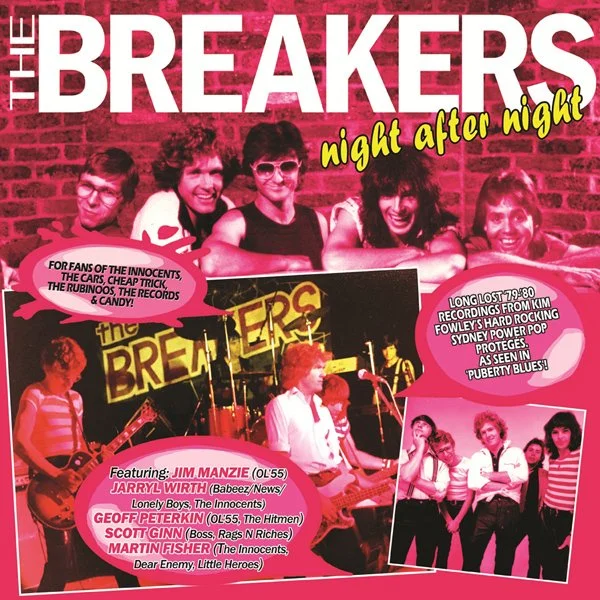
THE BREAKERS – Night After Night (Grown Up Wrong! Records)
By Ian McFarlane
Back in the rip-roaring days of the Aussie pub rock scene circa 1979-81, Sydney band The Breakers looked set to hit the big time.
They had a lot going for themselves: they’d been given the imprimatur by visiting American band manager/songwriter/Svengali figure/all-round scenester Kim Fowley; they combined two top songwriters in band leader/bassist Jim Manzie (ex-Ol’ 55) and guitarist Jarryl Wirth (ex-News); they had a genuine pop star front man in Scott Douglas (real name Scott Ginn) what with his movie star good looks and leather pants; they scored a live cameo in Bruce Beresford’s highly regarded movie Puberty Blues; the release of their catchy single ‘When I’m on TV’ (August 1980) got them a slot on Countdown…
As it transpired, the single failed to chart, their record company dropped them, they stopped touring, two members left in quick succession, Manzie was spreading himself too thin – what with his more lucrative production duties coming into play – and within 16 months they’d folded in disarray. Unwittingly, The Breakers became one of the great “if only…” stories of the Aussie pop scene.
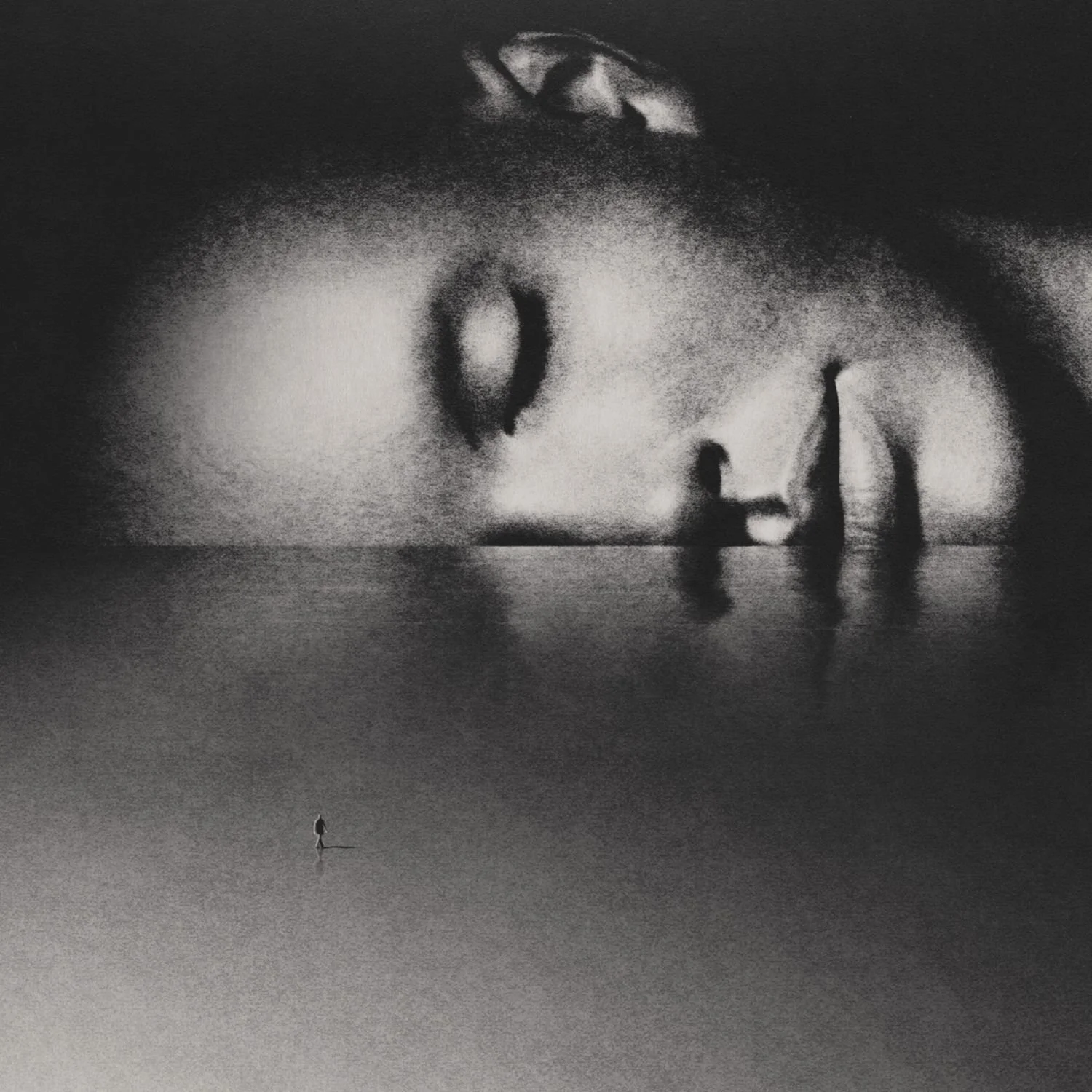
Okay, so let’s look beyond the circumstances of the band’s demise and focus on what they managed to record in that frantic 16 months of activity. Twenty-four tracks have now seen the light of day via the release of the compilation Night After Night on the Grown Up Wrong! label. The comp combines the single A and B-sides, demos, live tracks and the single that never was, ‘The Girl with Stars in Her Eyes’. The music’s prime power pop, mixed with pub rock moves, tough guitars, high harmonies, zesty synthesizers and a whomping backbeat.
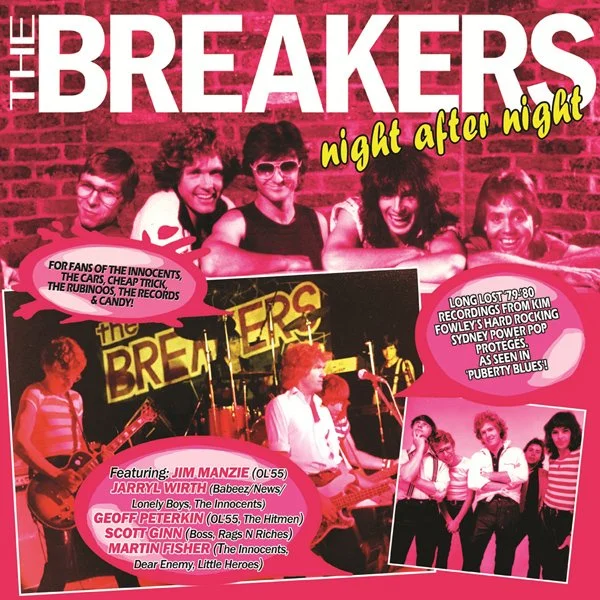
Tracks such as ‘Night After Night’, ‘Lipstick and Leather’ and the demo version of ‘When I’m on TV’ have a pronounced disco beat. They call to mind other rock-disco crossover songs of the time such as KISS’s ‘I was Made for Lovin’ You’ and Blondie’s ‘Heart of Glass’. ‘Lipstick and Leather’ is one of the highlights, a genuine classic-that-should-have-been.
The brace of live tracks – including Wirth’s ‘Sweet Dancer Au Go Go’ and ‘Modern World’, plus versions of ‘(I’m Not Your) Stepping Stone’, ‘I’ll Make You Happy’, ‘I Saw Her Standing There’, ‘Matthew & Son’ and ‘I’m a Believer’ – give a good indication of their live clout.
Dave Laing’s compiled the project in conjunction with Jim Manzie and Scott Ginn, and written the liner notes to boot. Laing has a long-storied history with impressive archival digs of this nature, including: Lipstick Killers’ Strange Flash – Studio & Live ’78-81 (2021); I Wanna be a Teen Again: North American Power Pop of the ‘80s 3CD set for Cherry Red (2025); Boogie! (Australian Blues, R&B and Heavy Rock from the ‘70s) (2012); and (When the Sun Sets Over) Carlton (Melbourne’s Countercultural Inner City Rock Scene of the ‘70s) (2014) just to name four. So you know you’re gonna get a quality production that’s worth investigation.
In Conversation with Jim Manzie
IMcF: Thanks for your time, Jim. We’re talking about The Breakers today.
JM: Yes, mate, let’s do it.
David Laing has put out Night After Night on his Grown Up Wrong! label. I know he’s been working on it for several years. Between you and David and Scott Ginn, it’s great that it’s all coming together. You must be happy with the compilation, I hope?
I’m very proud of it, very happy. I think the band really underachieved for its talent and its opportunities. I feel kind of bad about it. But listening to all the music now, it sounds fresh and it’s just got that pub rock Australian energy. I’m proud of the songwriting. And Jarryl Wirth really shines as a songwriter too. We all got connected because of Kim Fowley, right?
How did you come into contact with Kim Fowley? I was talking with Jarryl and he said that he replied to an advert and went and saw him in Melbourne.
Well, I heard about that famous ad he put in the paper saying, ‘are you the next Elvis or the next Beatles?’ And he did the same thing in Sydney. He holed up in a room in the Siebel Townhouse. I don’t know if you remember, the Siebel Townhouse was someplace that you could get anything you wanted. I didn’t meet him there. Glenn A. Baker introduced me to him down at Festival Records because I was doing a session with Tommy Emmanuel, of all people. And Fowley turned up and Baker was singing my praises. Fowley got me into this back room and he said, ‘Play me your best 30 seconds’. He said, ‘Do your hyper dog dance right now’. He had all these beat sayings and language, you know? I played him part of, I think, an Ol’ 55 song that was pretty good. Maybe ‘Stay (While the Night is Young)’ or ‘Living for Your Smile’. And he just hit stop on the cassette deck. He said, ‘You’re my man, you’re good, you know how to write a chorus, I’ll work with you’.
He organized to come down to my house, my mum and dad’s house in Cronulla. And we wrote 11 songs in four hours. Fowley had these huge books of lyrics. I mean, he had some great titles in the books. And he would just read out all these titles. He’d say, ‘Do you like this one? Do you like this title?’. And I would say, ‘Oh, that’s a great title’. He’d say, ‘Let’s work on that’. And he could write lyrics at the drop of a hat. He would just write like 10 verses in front of you. So look, it was a remarkable experience. I can’t believe we wrote 11 songs in a few hours, and two or three of them were really good. ‘Lipstick and Leather’ from the album. Another song that George Young really liked, ‘Hearts on Fire’, and we got that released with Joy Smithers. I’ll be honest with you; we made money from our little songwriting session years later. But yeah, it was amazing to work with him.
He seemed like quite an imposing character in many ways, because he was very tall, wasn’t he, as much as being a real scenester?
He looked like Frankenstein. He was really tall. And he had this harsh kind of exterior. The arrangement between me and Fowley was, he didn’t drive so I offered to drive him around Sydney to all these appointments that he had with different studios and songwriters, and with Southern Music. And I had a car, an HR Holden, Premier, two tone, 1966. I drove him around and he just invited me into all these meetings, and he talked to me as we drove around Sydney. And it was completely educational, Ian. He did the same thing with Jarryl, I think, just talking. I remember one time I dropped him off at Southern Music and he came out with $3,000 in cash. He should have handed some over to me. I think he gave me 20 bucks for petrol. Oh, boy.
But look, he was an amazing person. His business model was he would run around town writing songs with all these people; he would just make sure he had a piece of all the songs. The disappointing thing about Kim was he didn’t follow through with the recording sessions. He left it to us, okay. He was just planting a seed, and we were supposed to raise the baby.
If I could just back track, and this will come back to where we’re talking about The Breakers, but you’d had three or four years of frantic activity with Ol’ 55. I’m curious to know what led to you leaving the band and getting The Breakers happening?
Look, it was messy. The second Ol’ 55 album we did, Cruisin’ for a Bruisin’, got quite good reviews overseas because of tracks like ‘(Feels Like A) Summer’s Night’ and ‘Stay (While the Night is Young)’. You know, the more lushly produced pop songs.
Well, I’ve actually got in my hands the Canadian pressing of Cruisin’ for a Bruisin’, under the band name of The Breakers.
Wow. I’ll pay you anything you want for it.
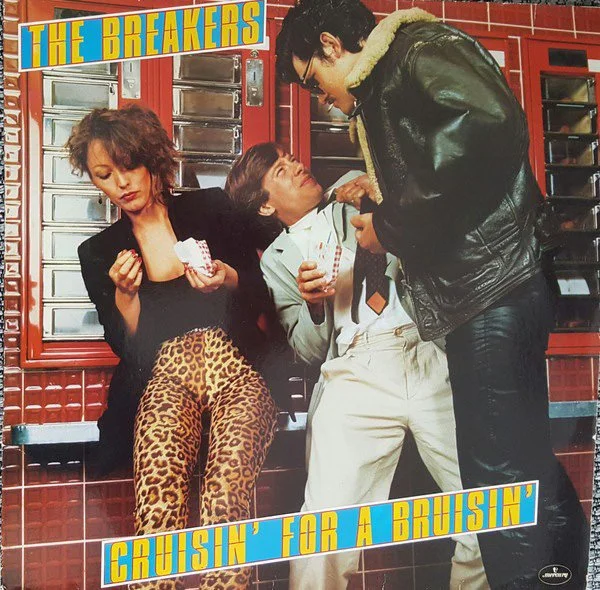
You don’t have a copy?
No, I don’t. But listen, so a lot of stuff happened with Ol’55. The label 7 Records wanted us to make certain moves, which was going entirely in that direction. The other guys in the band didn’t really want to do that. Legally it was messy and it wasn’t a good, happy time. But The Breakers broke off from that because Fowley came in and he lit a fire for this new direction that we could go in. And he brought Jarryl Wirth up to Sydney from Melbourne. And Jarryl and I wrote a few songs together and they were great. I thought fantastic, Jarryl was my future in the record label. There was a lot of record label politics involved. If I had my time again, I would handle it better. But I didn’t know how to handle that Ol’ 55 breakup. So it’s nice that we’re all back together playing music now, as Ol’ 55. We go to casinos, we do tours to Adelaide and, you know, we make decent money. We have a great time. People still love it.
With The Breakers you went in a very different direction. Jarryl had the heavier power pop guitar sound. And then you also had Scott Ginn (aka Scott Douglas), who had the classic pop star looks with his leather pants and long hair. There was a quote from the time, ‘heavy metal power pop that combines Beach Boys vocals, Ramones guitar riffs and Buggles synthesizers’.
That sounds pretty good to me. We really loved all that. We admired The Cars; we admired the Ramones. Cheap Trick was very much right up there on our thing. We had really good vocals, so we could sing big harmony choruses. Yeah, the band had a lot of potential, you know, it really did. And then we needed to stay together, like all bands. Every fruit ripens at its own speed, right? Ol’ 55 was different. As soon as we got Frankie J. Holden in the band, we had a Gold album within a year of meeting him. He just turned us on. I found Frankie at the Whitehorse Hotel in King Street, Newtown… but that’s another story.
Soon as we put him in the band, we were just a great entertaining band, a lot of fun. He was just magic in front of any audience. And we had the music to back him up. He had it all going on. He was funny. He’d do that thing, ‘If you want to jive and bust around, we’ve got the sound. We’ve got 850 whale and pounds of sound up there where the air is red’. He’d just come out with all this jive.
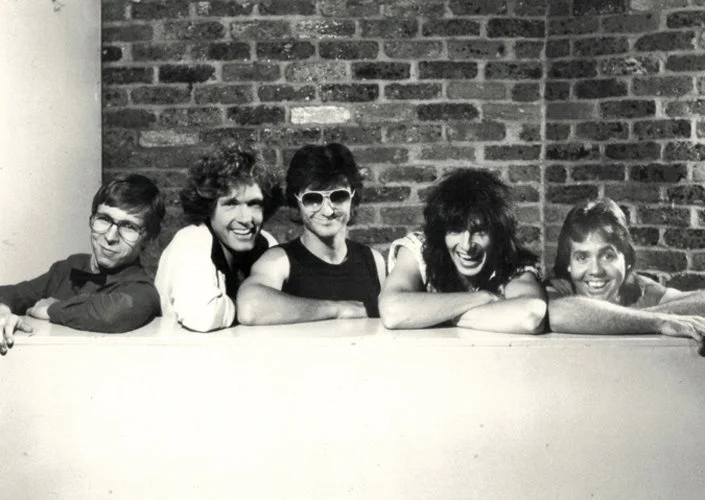
With The Breakers you had the hallmarks of a classic pop band. You had the sounds and ‘When I’m on TV’, the single, you got on Countdown. You’d been on Countdown with Ol’ 55, but that must have been magnificent for The Breakers.
Yeah, and I met John Farrah on that Countdown show. He came up to me after and said, ‘what a fantastic song, call me when you get to LA’. He’s one of Australia’s greatest songwriters. He wrote all that stuff for Olivia Newton John and Grease and Xanadu. With The Breakers we needed to stay together for a couple of years and just work it out, you know? We probably weren’t ready at the time. The band hadn’t worked out its vision and its direction. I think we had too many influences. We were good at a lot of different things. We needed to hone our vision, have a tight little vision, find our proper direction. Look at AC/DC. I remember Malcolm Young saying to me one time, ‘Jimmy, we’ve done the same album 20 times in a row, we just changed the cover’. And I thought, that’s brilliant, because you’re not going in too many different directions. It was probably a good idea if I hadn’t produced The Breakers, because I was working too much. I was producing The Innocents, Loaded Dice, The Affections. I was writing a lot of jingles for radio and TV. I was spreading myself very thin. In hindsight we should have gone to Charles Fisher or Mark Opitz and just said... ‘can you produce us?’. That would have been a little bit easier on me and the guys.
The front cover of the compilation is subtitled ‘Long lost ‘79-‘80 recordings’, but I gather there was never a planned LP at the time?
We just didn’t stay in the game long enough. I think we’d pretty much broken up within 16 months of getting together and doing our first gig. We did a session where we recorded ‘Lipstick and Leather’, ‘The Girl with Stars in Her Eyes’, and something else I forget. I thought ‘The Girl with Stars in Her Eyes’ was really good. And we got a lot of interest from Gibson Kemp over in London. We had people already jumping onto us, but we didn’t stay together long enough to get that released. And I think if that had come out, we would have had much better momentum. Jarryl was really developing as a songwriter. It was good that he was around us. We were working a lot. We were doing pub rock stuff. And the reaction was good. I remember we played with the B-52’s and we really smashed that support. And the B-52’s came up to us afterwards and said, ‘yeah, yeah, yeah, call us when you get to LA’. But we just needed to stay together a bit longer, Ian.
I really like the demo version of ‘When I’m on TV’, it’s really good, isn’t it?
Yeah. And I think the demo version of ‘Lipstick and Leather’ is better than the single recording. And as you know, KISS was very interested in that song. They might have recorded it but never released it. I do remember Vanda and Young were very keen, passionate about that song. When I worked for Vanda and Young I was producing the Choirboys’ first album. It was a real delight to work with Vanda and Young after The Breakers. I remember that every now and then George would say, ‘Jimmy that’s definitely your best song’, and I would say, ‘George why don’t you produce it?’.
You did end up going to LA, didn’t you? You worked on soundtracks.
I went to LA in 1986 and just got lucky. I met a guy. I’d lost my recording contract over there that Vanda and Young were trying to set up for me. And I met a director. He was the only guy sitting at this counter in a Chinese restaurant. And I just started chatting to him and he said, ‘oh, you write music’. He said, ‘I’ve just directed a film starring Vincent Price, I’m handing out 30 VHS tapes, whoever does the best music, gets the job’. I said, ‘give me that motherfucking tape’. I got a little opportunity, you know, and I worked with a guy called Pat Regan and we did the best version of this piece for this movie. And it was Billy Thorpe who set me up with Pat. Billy was living in LA and he was very helpful to me. He set me up with Spencer Proffer, who was producing Quiet Riot. He set me up with Pat, who was the keyboard player. And Pat did an amazing demo with me. And we handed it in. And yeah, I got the job for From a Whisper to a Scream, starring Vincent Price. And then those guys sponsored my work visa, which is tough to get, as you know. And then one thing led to another. I ended up writing horror music scores for 25 years. Texas Chainsaw Massacre 3, Tales from the Darkside, Night of the Demons. I had this whole career writing music for movies in Los Angeles.
So, getting back to The Breakers, we had a good energy in the band. Everything was friendly, we just had really fun times. Let’s mention Geoff Peterkin, a fantastic drummer and singer. Martin Fisher, of course, wizard on the keyboards. Something I almost forget to mention is that The Breakers appeared live in the movie Puberty Blues. I did some work with Bruce Beresford. I think it was filmed at the Caringbah Inn or the Sylvania Inn. It was so scary recording live to a movie. I can’t describe how scary that is. Whatever mistake you make, it’s in the movie forever.
In Conversation with Jarryl Wirth
IMcF: Thanks for your time, Jarryl. Today we’ll be talking about The Breakers, but firstly I wanted to spin back and talk about News and your involvement in the original Melbourne punk scene. On a personal note, I’m from the same era, I was 18 in 1978. I wasn’t part of the punk scene but two of my best mates in high school were Sean Kelly and James Freud, who were in Teenage Radio Stars. I used to watch them rehearse and I saw them play live, and the other bands in the whole Suicide Records thing. I never got to see bands like News or the Young Charlatans. It seemed to me that bands like News and the Young Charlatans couldn’t have cared less about Suicide. There was this view that Suicide was just a sham. And it kind of was in a way, wasn’t it?
JW: Yeah, we didn’t really want to have anything to do with it. It just seemed like commercial opportunism, to get on to the latest thing, without any genuine interest in the music. You don’t know what could have happened.
News was an interesting band. You had that News graffiti thing where you’d see News spraypainted on walls around Melbourne.
That was remarkable. We got on Channel 10 News because of that. People were saying, ‘what the hell is this?’. They didn’t know what it meant. Is this some terrorist group or something?
Did you know who did it?
No, just a fan.
You definitely had your own thing going, didn’t you?
Yeah. I guess the Ramones was our main influence, punk with a pop influence. And the Sex Pistols, I suppose. But I came from a background of the early ‘70s. I started playing guitar when I was 14 and I was into the holy trinity of heavy metal, Deep Purple, Black Sabbath and Led Zeppelin. Then T. Rex. I was just in love with big guitars. I was in a sort of heavy metal / prog rock group called Electric Blue and we did pretentious things like writing songs in 7/8, just because we could. Then the Ramones came along in ‘76, that changed everything. We heard the Ramones and we just cut our hair short. But the guitar was basically still the same. It was a very smooth transition. It was just louder and faster, I suppose. John Murphy was a great drummer.
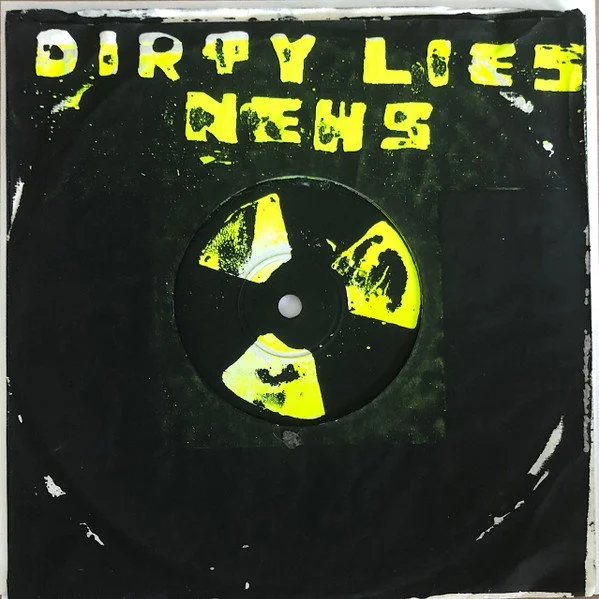
You released a couple of records; they’re classic punk singles. (‘Dirty Lies’, ‘Dirty Secrets’ and ‘Dowanna Love’ as the Babeez)
They are, they’re apparently collector’s items, selling for US$300 or something.
The ‘Dirty Lies’ single has the bright yellow screen-printed cover with the nuclear symbol printed on the label.
I don’t know what the point of that was. We were originally called the Babeez, but we had to change our name because a UK band came out called The Babys. We changed it to News.
I thought News was a great name for a punk band. But things moved very quickly in those days, the whole Melbourne punk scene had dissipated within 12 to 18 months. Then we saw the rise of bands like Models and Boys Next Door when they became The Birthday Party. Next you had bands like Hunters & Collectors coming in. News broke up and Gavin Quinn formed New 5.
We had a falling out and just went our separate ways, yeah.
How did you come into contact with Kim Fowley and become The Lonely Boys?
Kim was a really interesting guy. He’d put a full-page ad in Juke magazine. It said something like ‘Hollywood Producer’s coming to Australia looking for the Australian Beatles’. He was staying at the Hilton in Melbourne. The ad said, ‘call this number’, so I called the number and he said, ‘come and meet me’. And I did. He was kind of a weird guy, but we got on really well. There were a few wild scenes when I went to his hotel room. He was very paranoid. Someone knocked on the door, and he went into the bathroom and got his razor blade. He was standing behind the door ready to strike with his razor in case it was somebody out to get him. It just turned out to be room service.
By all accounts he an imposing character in a lot of ways.
He was, yeah. But he seemed to like me. I was playing him demos of my songs, and he called up Ross Wilson. He played one of my tapes to Ross over the phone. Ross didn’t know I was in the room, so he said, ‘oh yeah, it sounds pretty good, except it’s got a few daggy bits in it’. That was funny! I ended up playing in Ross’s wife’s band for a while.
And you recorded as The Lonely Boys.
That’s right. Kim put me in the studio for a day. The Lonely Boys was just something he made up. I played all the guitars and bass. I had a friend on drums, and we got the guys from The Innocents to do the backup vocals. They might have still been called Beathoven at that time, I’m not sure. Kim took photos of me and some random models, and he said, ‘that’s the band’. The songs eventually came out on some rare compilations. He used to put out these compilations of all his various projects. I’ve got one somewhere.
(Ed Note: the compilations on Bomp! Records were Vampires from Outer Space [1979], Waves, An Anthology of New Music Vol. 2 [1980] and Kim Fowley’s Hollywood Confidential [1980])
Independently of all this, Kim had also got in touch with Beathoven / The Innocents and with Jim Manzie. Jim was looking to do something a bit harder than he’d been doing in Ol’ 55. He was looking to do a new band. And after the punk phase I discovered melody. I got into The Beatles and Abba and Elton John. I really wanted to play more melodic stuff. Kim thought it would be a good idea, this sort of odd couple meeting in the middle, doing power pop. I went to Sydney and auditioned and the rest is history.
The Breakers looked like a classic pop band. You had Scott Douglas (real name Scott Ginn) looking glamourous in his leather pants. In his liner notes for the album, Dave Laing wrote ‘there’s the pop star poster boy vocalist/guitarist, Scott Ginn, Robin Zander to the bespectacled Jarryl’s nerdy Rick Nielsen’. What did you think of that?
It’s actually totally true! And we were big fans of Cheap Trick. I don’t think we were conscious of it at the time, but looking back we were just trying to do our own version of Cheap Trick. Also, The Cars’ first album had just come out and that was a fantastic album. Just as The Breakers were staring out, those two bands had a big influence on us. So, David’s quote is just spot on. I’m not upset by it at all.
There’s another quote from the time that described the band’s music as, ‘heavy metal pop that combines Beach Boys vocals, Ramones guitar riffs and Buggles synthesizers’.
I think that’s pretty spot on. All those influences were swirling around.
You recorded a lot of material and Dave’s combined it all on the album. The single ‘When I’m on TV’ came out, and you got the slot on Countdown. The Countdown clip’s on YouTube, and you’ve got the guitar/shirt, red/white stripe combo going on.
I’m proud of that. We’d already done some pre-recording. At the start of the clip, there was a shot of me in front of a TV set. I’d done a Pete Townshend thing, smashing my guitar, the neck of that red striped guitar was actually broken. And if you look closely in the Countdown clip, you can see it’s got gaffer tape around the neck holding it together. Of course we were miming, we weren’t really playing it. It’s just funny.
It must have been fun getting on Countdown, having come from a punk background. Molly Meldrum was always great with getting behind new bands. The compilation includes the single version of ‘When I’m on TV’ and the demo version which is just as good.
I was just listening back myself a couple of days ago, and I really like both versions.
Once again, things moved pretty quickly because the single had the potential to be a hit, but it just didn’t happen, unfortunately.
No, it just died. It didn’t do anything at all. No radio stations picked it up. We actually had a second single ready to go called ‘The Girl with Stars in Her Eyes’, which I’d written with some help from Jim. Jim had written ‘When I’m on TV’ and Jim and Kim had written the B-side ‘Lipstick and Leather’. Kim had gone down to Jim’s house one day and they wrote 11 songs in an afternoon. I think ‘The Girl with Stars in Her Eyes’ had more potential to be a hit, but we broke up before we ever put it out. And yeah, I often look back on that with regret. I wish I’d persevered with that longer.
The breakup seemed to come out of nowhere.
We were together for about 18 months. That seemed like a long time to me. At that stage, you know, I was pretty young. When you think about it though, The Beatles had been together for years before they had a hit. You’ve really got to put in the time. What happened was that The Breakers and The Innocents, we’d all met through Kim. David Minchin had left The Innocents, and they needed a new guitarist. So, they were coming around hassling me. They were saying, ‘leave The Breakers, they’re no good, come and join us’. I was young and impressionable. I got talked into it and I sort of regret that now, looking back.
Did you enjoy playing with The Innocents?
I did actually, yeah. I thought Greg Cracknell was a fantastic singer. He sang the demo of ‘Night After Night’, I think. And I went on Countdown with them too. I’ve actually been on Countdown three times. I did a project with Jim a bit later on, about the royal wedding. I wrote a song called ‘Charlie’s Getting Married at Last’ and Jim produced the recording. We called it Men of Harlech, which is a place in Wales. We were supposed to be a Welsh choir. We did a video in an underground station. We went on the Mike Walsh Show.
On the album, there are two more of your songs, ‘Sweet Dancer Au Go Go’ and ‘Modern World’. You originally did ‘Sweet Dancer Au Go Go’ with News.
We did. And I’d recorded it at the Kim Fowley sessions, as The Lonely Boys.
Dave’s compiled basically everything the band did. There are demos, live covers, all sorts of things. He’s referred to it as ‘Long Lost ’79-‘80 recordings’. Was there an actual planned LP in the works at the time?
No, we never got that far. I’m not sure what happened. Jim was the experienced guy who had success in the industry and he was the leader. I didn’t have much to do in the dealings with the record company, which was 7 Records. My vague impression is that because ‘When I’m on TV’ had flopped, we were dropped by the record company. They didn’t want to put any more money into it. We were a bit down about that. We were sort of on hiatus, we weren’t touring. And so that’s how I got persuaded to jump ship. Actually, Martin Fisher the keyboard player jumped first. The Innocents talked him into joining up with them, and I followed.
With The Breakers, there was the possibility of KISS recording ‘Lipstick and Leather’. Is that right?
Well, Kim would have made the connection with KISS. As far as I know, that was a genuine thing that they were considering it, but in the end they decided not to. I didn’t really have a stake in that because I wasn’t one of the writers.
I like The Breakers’ version of ‘(I'm Not Your) Stepping Stone’. The Monkees, Paul Revere and the Raiders and the Sex Pistols all recorded versions.
I really like our version. I think we were a pretty good live band. The live tracks have a lot of energy and rawness. ‘I’ll Make You Happy’ by The Easybeats, which the Divinyls also did. Those covers give you a pretty clear idea of where our influences were coming from. Really well-crafted pop songs that had a bit of energy to them, you know? We played so many gigs, in both The Innocents and The Breakers. We were just on the road all the time.
In reference to the band, for me the word volition comes to mind because it was a whirlwind of activity and then it was over too quickly. At least you got to record a lot of quality material, all included on the album.
Yeah, and it’s been fabulous that David’s done this. It’s taken two or three years to put together. Scott did a lot of the work, just cleaning up the recordings and getting them mastered and doing the graphics for the album cover. David and Scott deserve most of the credit for putting it together. It’s really exciting. I’m not expecting it to change our lives or anything, but it’s great to have a record of what we did.
End Note: The LP version contains 14 tracks, with the CD edition boasting the full 24 tracks.